
International Relations BA Students at the UNESCO Peace Conference

On 7 September 2026, the Hungarian Academy of Sciences hosted the UNESCO international conference entitled “Road for Peace: Dialogue and Action for Tolerance and Intercultural Understanding”, organised on the occasion of the United Nations International Day of Peace. The conference focused on opportunities for promoting peace, preventing conflicts, building trust, strengthening intercultural understanding, and developing long-term cooperation.
The event was opened with welcome addresses by Ambassador Katalin Bogyay, President of the United Nations Association of Hungary and the UNESCO Hungarian National Commission, and Professor Mihály Pósfai, President of the Hungarian Academy of Sciences. Among those delivering opening speeches were Zoltán Tarr, Minister of Social Relations and Culture, and Khondker M. Talha, President of the 43rd session of the UNESCO General Conference. The distinguished guests also included Hedva Ser, UNESCO Goodwill Ambassador, Gergely Deli, Rector of Ludovika University of Public Service, and Mark C. Donfried, Director of the Institute for Cultural Diplomacy.
Students from several programmes of Széchenyi István University also attended the event, including international students enrolled in the BA programme in International Relations at the Apáczai Csere János Faculty of Education, Humanities and Social Sciences. The conference was particularly closely connected to the professional content of the International Relations BA programme, as the participants had the opportunity to engage with current issues related to international cooperation, diplomacy, peacebuilding, and intercultural dialogue.
The professional programme featured renowned Hungarian and international speakers, as well as two panel discussions. The first panel was connected to the official theme of the United Nations International Day of Peace 2026, “Invest in Peace: For Everyone, Everywhere, Every Day”, and addressed, among other topics, investment in peace, international cooperation, and social engagement. The discussion was moderated by Prof. Dr Eszter Lukács, Vice-President for International Affairs and Strategic Relations at Széchenyi István University. The second panel, inspired by a thought of Béla Bartók, explored relations between different nations, cultural dialogue, and opportunities for promoting peace.
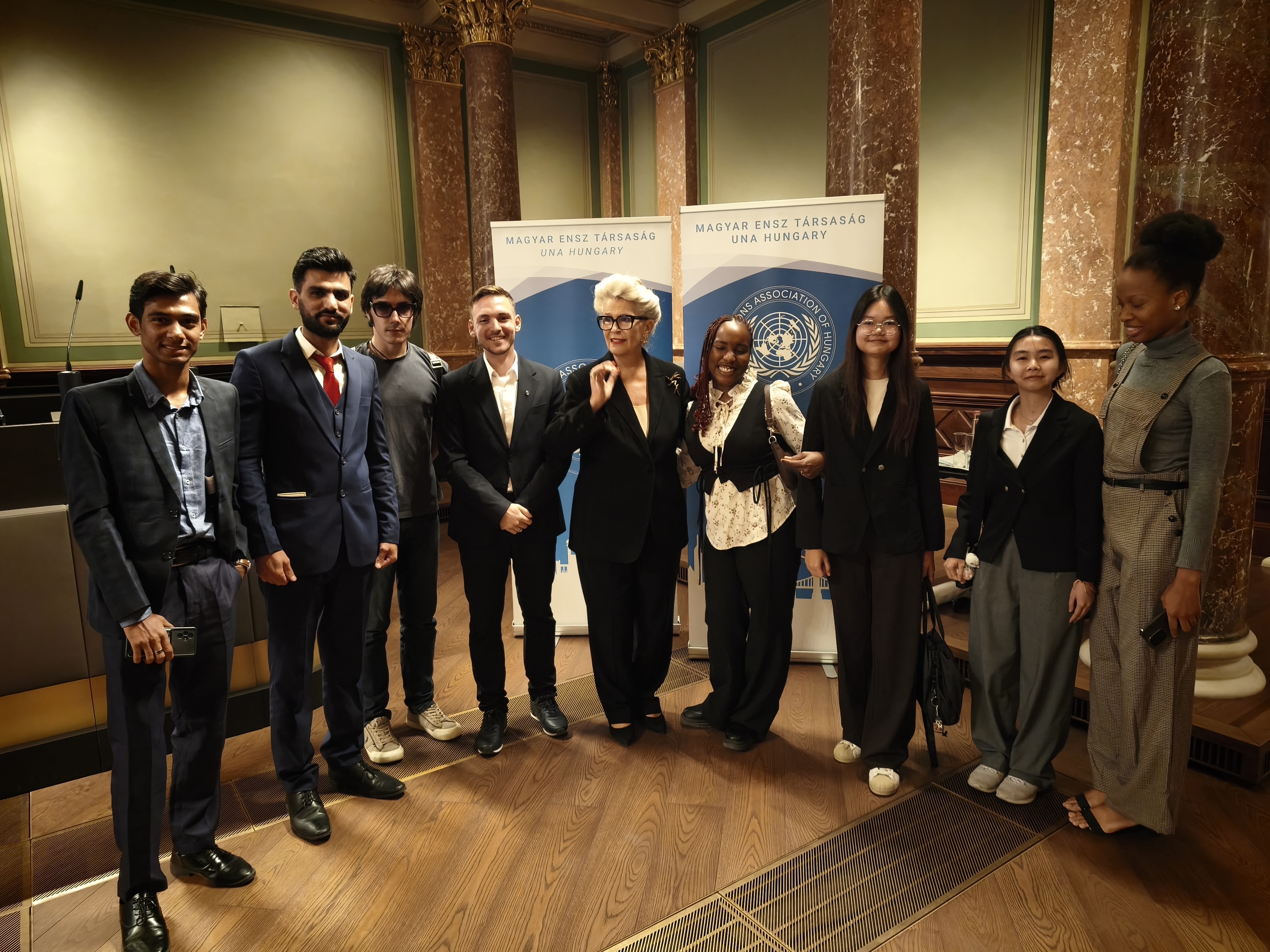

Participation in the conference provided our students with a valuable opportunity to deepen the theoretical knowledge acquired during their university studies in an international professional environment and to gain first-hand insights into current issues related to peacebuilding, diplomacy, and international cooperation. Participation in international events of this kind contributes to broadening our students’ perspectives on international processes and provides them with experiences that can be valuable both during their studies and in their future professional careers.